

Dig This!
RaketspelDig This! is a touch-controlled puzzle game where you carve paths to guide balls into cups. Its handcrafted levels build from simple routes to challenges involving momentum, collisions and special items.
App information
- Developer
- Raketspel
- Category
- Puzzle
- Package name
- se.raketspel.digaround
- Version
- 1.2.20
- File size
- 151.9 MB
- Requires
- Android Language:
Screenshots
About this app
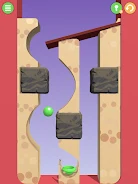
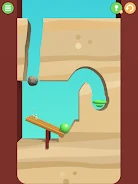
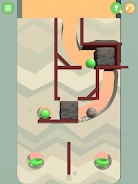
Dig This! turns drawing into a way to solve physics puzzles: carve a path with your finger and guide one or more balls into a cup. The game’s hundreds of handcrafted stages make that simple action useful in different ways, from shaping a direct route to working out how momentum, collisions or special items affect the outcome. Levels introduce challenges gradually, so players can learn through play. Optional solutions can help when a puzzle proves difficult, while the ability to retry a stage leaves room to test another approach.
Carving a route through each puzzle
Players dig trenches, draw ramps or create barriers to change where a ball travels. The controls support both short, precise strokes and broader gestures, letting you adjust a small section or reshape more of the playfield. You can also erase and redraw, which makes experimentation part of solving a stage rather than a one-time commitment. Changes in slope and curve affect the ball’s movement, so a small adjustment can alter the result.
Learning the physics and special items
Rolling, bouncing and momentum shape how the balls respond to a route. Some stages add elements such as timed explosives or balls of different colors, introducing more variables than a straightforward path. Moving elements or temporary effects can make timing important: the player may need to coordinate a carving decision with releasing a ball. These mechanics encourage observation and planning, though unexpected bounces can also call for adjustments and retries.
Progression, hints and replay
Stages begin with basic puzzles and gradually introduce more involved problems using momentum, chain collisions and features in the environment. Each level is designed around a particular trick or concept, rather than being randomly generated. You can revisit levels to explore alternative routes or try to solve them with fewer edits. Optional level solutions provide assistance when needed, while repeat attempts let players work out a solution independently.
A clear view of the playfield
The game uses simple 3D graphics to show slopes, gaps and the movement of objects without making the playfield visually busy. Shading and camera angles provide spatial cues as you decide where to dig. Basic settings allow changes to control sensitivity, camera zoom and visual detail, offering ways to adjust the presentation and touch response to personal preferences or a device’s screen.
Playing at your own pace
Levels can be played without a network connection, making the game suitable for offline sessions. The source also describes the interface as direct and its success conditions as clear, with hints available as optional assistance. Puzzles that depend on precise timing or a particular trick may take several attempts, so the experience favors deliberate problem solving over constant action. Players can pause and return to a level without losing progress, according to the supplied description.
Version history
View all06 Aug 2026 · stable
Frequently asked questions
Can Dig This! be played offline?
Yes. The supplied information says that levels do not require a network connection to play.
How do you control the game?
Use touch gestures to dig trenches, draw ramps or barriers, and reshape paths for the balls.
Does the game offer help with difficult levels?
Optional level solutions are available as hints.