
Construction Simulator PRO
Construction Simulator PRO combines direct control of construction vehicles with company management. Players complete contracts using machines such as excavators, cranes, bulldozers, and cement equipment, then use the documented progression systems to expand their available work, crew, and machinery.
App information
- Category
- Simulation
- Package name
- com.mageeks.android.constructionsim17
- Version
- 2.4.7
- File size
- 341.1 MB
- Requires
- Android Votes:530
Screenshots
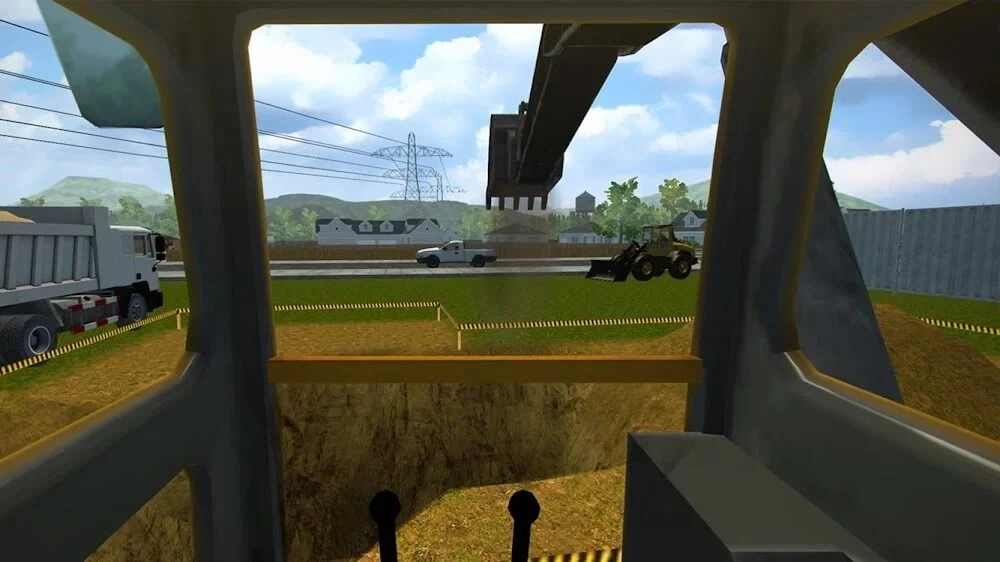
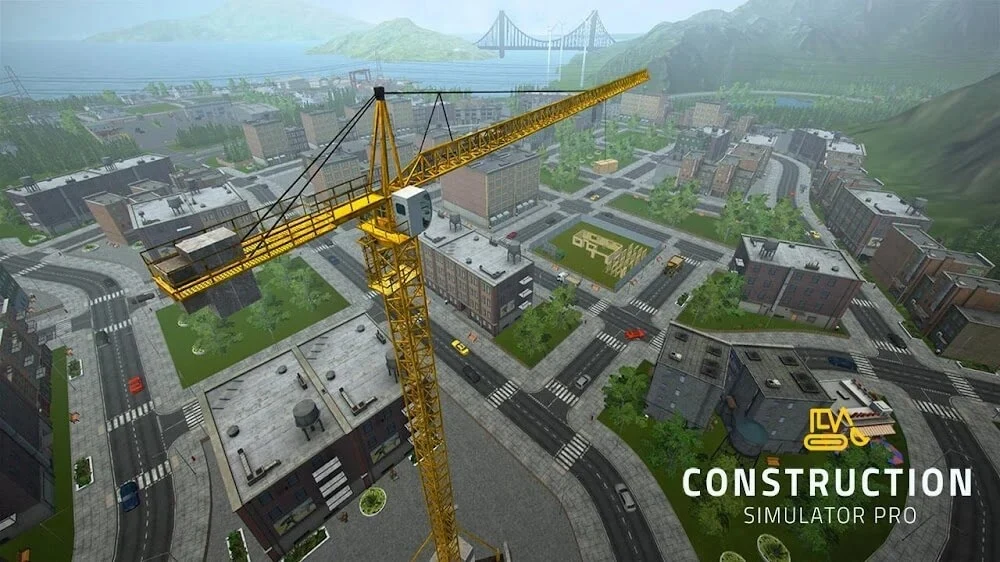
About this app
Construction Simulator PRO is a simulation game about operating construction machinery and managing a growing construction company. Its central activity connects hands-on vehicle work with contract completion: players travel to sites, use suitable equipment for the assigned task, and receive funds that can support further business development. The source describes more than 20 contracts, 17 directly controlled vehicles, two large cities, and two villages, giving the game a broad setting for its construction jobs.
Operating different construction vehicles
The main input in Construction Simulator PRO is direct control of heavy machinery. The documented vehicle lineup includes cranes, excavators, bulldozers, forklifts, cement mixers, and other construction equipment. Each machine is described as having its own handling experience rather than behaving like a conventional arcade vehicle. That means operating an excavator, positioning a crane, clearing ground with a bulldozer, or moving materials with a forklift represents a different type of task within the same construction workflow.
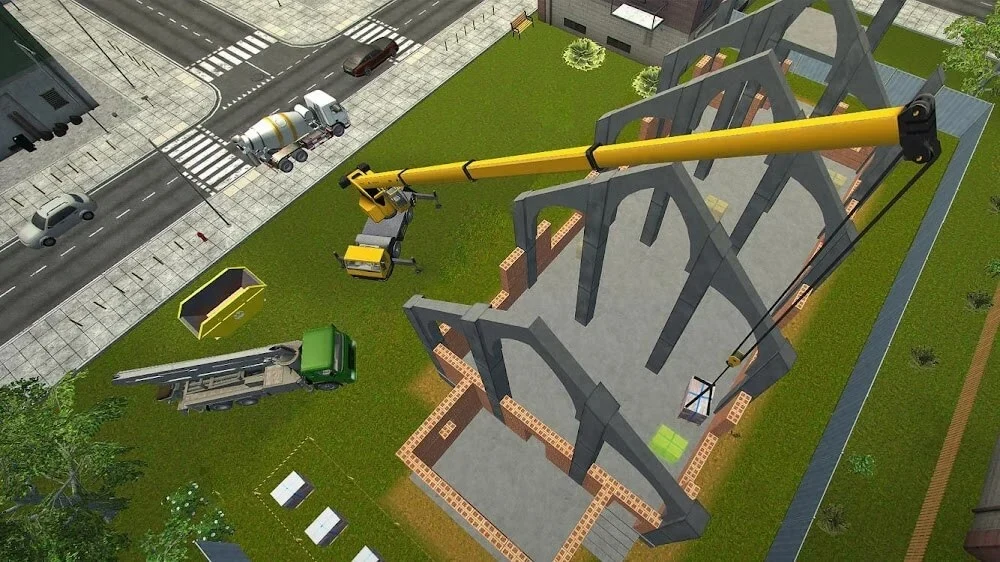
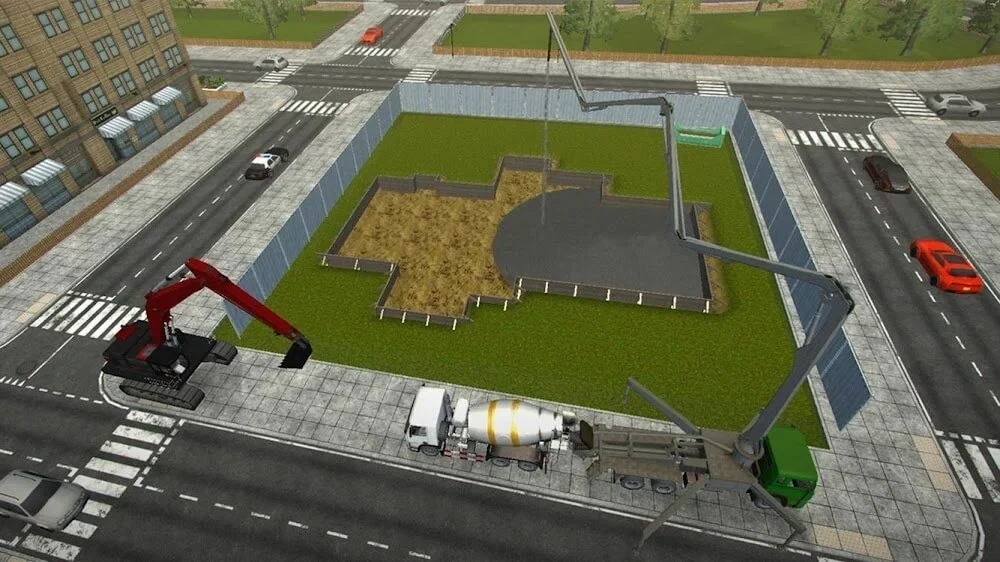
The source specifically emphasizes responsive controls, tilting camera angles, and moving machine parts. It also describes activities such as digging foundations, lifting beams, clearing a site, delivering materials, and pouring concrete. These examples show how vehicle operation is tied to the work objective: the player selects or drives the equipment needed for a particular stage of a contract and then performs the associated operation. The source does not provide exact control layouts, machine statistics, or formulas for evaluating performance, so the vehicle system is best understood through these documented actions rather than assumed technical rules.
Learning to operate the machines is presented as an important part of the experience. The source says that the controls require practice and that smooth operation depends on attention to the vehicle's levers and handling. This supports describing the game as a machinery-focused simulator, but it does not establish a specific difficulty curve or a universal best technique for every vehicle.
Contracts connect machinery to company growth
Construction work is organized through contracts covering different types of projects. The documented examples include housing developments, commercial buildings, infrastructure work, a church, a skatepark, and city hall. These projects give the player objectives beyond simply driving around, because the selected machinery and construction actions are used to complete a defined job at a site.
More than 20 contracts are mentioned in the source, with each project potentially requiring a different combination of vehicles and operations. A crane may be relevant when beams must be lifted, while an excavator can be used for foundations and a bulldozer for site clearing. These relationships are examples of the tasks described by the source; it does not specify that every contract follows one fixed sequence or that particular machines are mandatory for every project.
Completing jobs earns funds for the company. The documented progression then links those earnings to hiring crew members, purchasing equipment, upgrading machinery, and taking on larger projects. In this structure, contract work is both the practical activity and the stated route toward expanding the business. The source describes the player beginning as a small contractor and moving from more modest jobs toward more ambitious construction work.
Managing crews and equipment
Company management adds decisions alongside vehicle operation. Players are described as assigning suitable teams to different construction sites and hiring skilled workers for larger-scale projects. The source does not give a detailed staffing model, such as individual worker statistics or exact crew requirements, but it clearly presents team assignment and hiring as part of the management layer.
Equipment can be purchased, rented, and upgraded. The supplied guidance distinguishes between machines used frequently for longer periods and equipment needed only occasionally. It gives a crane as an example of machinery that may be worth purchasing when it is used often, while drilling equipment is presented as an example of something that may be rented for less frequent work. Rented items should be returned after use according to the source, which connects the equipment decision to the ongoing management of available funds.
Upgrades are described as improving efficiency and introducing tools for more advanced tasks as complex jobs become available. Customization also allows machinery to be adjusted for visual preferences or a player's preferred approach. The source does not list every upgrade effect or define numerical efficiency gains, so these systems should be treated as documented progression features rather than a specific optimization formula.
Travelling through the construction world
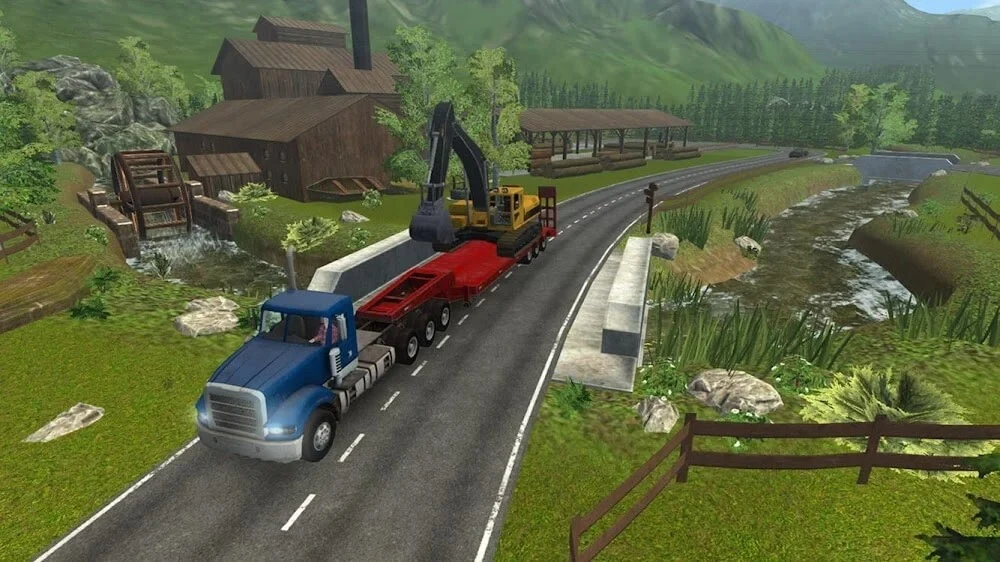
The game includes a large map containing two cities and two villages. Players travel between jobs with their equipment instead of relying only on immediate placement at each destination. The source describes these journeys as commutes and says that new construction opportunities can be seen while looking around the map. The changing environments therefore form part of the connection between contracts: the player moves through the places where construction work is taking place.
Fast travel is also documented, but locations must first be discovered before they can be used for that purpose. The supplied guidance recommends travelling around the map early to reveal locations. Once a location has been discovered, the source says players can move between locations and switch from one vehicle to another wherever it is. These statements describe the availability conditions for fast travel without establishing how long each journey takes or whether every vehicle can be moved in exactly the same way.
Skills and optional driving settings
The source describes a skill system intended to support company development. One named skill is “Good Business Sense,” which is said to provide more money for each completed job. Other examples focus on saving money, improving efficiency, increasing capacity, or speeding up certain common operations. Players can combine skills according to the supplied guidance, although the source does not provide exact levels, costs, or numerical bonuses.
Traffic offenses are another documented setting. The source says players can turn them off if fines from traffic rules interfere with business growth. This is presented as an optional configuration choice rather than a construction mechanic. The material does not define every offense, penalty, or traffic behavior, so the supported point is simply that the game includes a traffic-offense setting that can be disabled.
A varied construction routine
Construction Simulator PRO places vehicle operation, travel, contracts, and company decisions in the same progression loop. The player moves from site to site, selects machinery for documented construction activities, completes contracts, and uses the resulting funds to develop the company. Projects range from smaller building work to civic and infrastructure examples, while the available cities and villages provide different locations for that work.
The result is a simulation focused on the relationship between machine handling and project management. Its documented systems do not require a separate combat, character-building, or multiplayer explanation. Instead, the core experience remains centered on controlling construction vehicles, fulfilling varied contracts, assigning teams, and deciding when equipment should be purchased, rented, or upgraded.
Version history
View all27 May 2026 · stable