

Beholder: Conductor
Beholder: Conductor places you in charge of an apartment building in the oppressive world of Krushvice 6. You must manage residents, gather information, search rooms, observe suspicious behavior, and decide whether to report, profile, or blackmail people while balancing government demands, personal income, and the consequences for your family.
App information
- Category
- Adventure
- Package name
- com.creativemobile.beholder.liteapks
- Version
- 2.6.275
- File size
- 365.3 MB
- Requires
- Android Votes:195
Screenshots
About this app
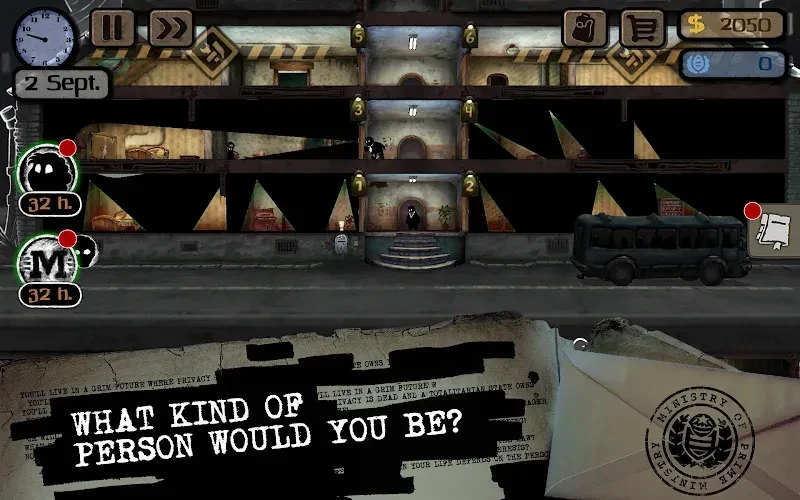
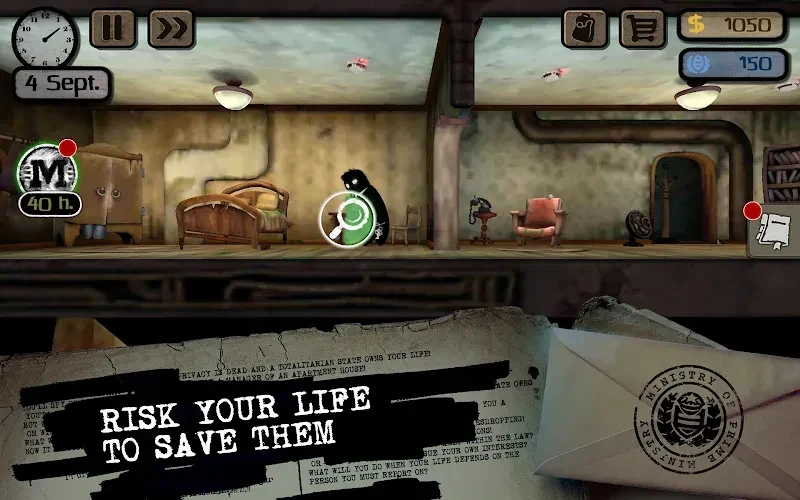
Beholder: Conductor places you in the role of an apartment-building manager in the dystopian world of Krushvice 6. Your public responsibility is to look after the building and its residents, but the State also expects you to monitor conversations, inspect belongings, and identify activities that could be considered threatening. The central challenge is deciding how to use the information you uncover, because reporting a resident, protecting them, or exploiting their situation can change the story and affect the people connected to your decisions.
Managing Residents Under State Orders
The game combines apartment management with covert investigation. You interact with tenants and family members to learn more about their circumstances and about other people in the building. Conversations can reveal information that becomes useful for a profile or an official report. Some details are highlighted when they can contribute to your records, helping you distinguish ordinary dialogue from information with consequences.
Your position creates a conflict between government instructions and the needs of the residents. The State expects evidence of illegal items or activities to be reported, while your own financial situation and family responsibilities can make other choices tempting. The game presents these decisions as part of the main play loop rather than as isolated story moments: gather information, assess what it means, choose how to act, and deal with the result.
Searching Rooms and Recording Evidence
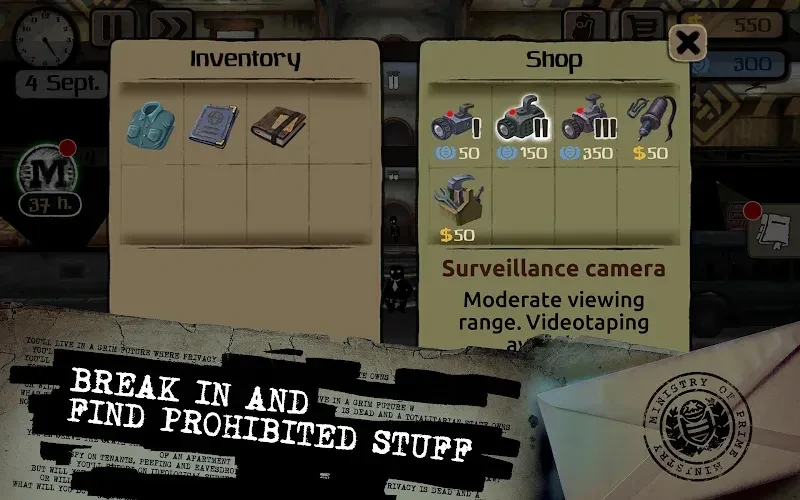
When a tenant is away from their room, you can enter through the door and search furniture for items of interest. Objects found during a search can be recorded in your notebook for later use. The same system also allows items to be taken, and an object from your inventory can be planted in furniture. These actions make room searches more than simple inspections, since the contents you find can become evidence or be used to influence later events.
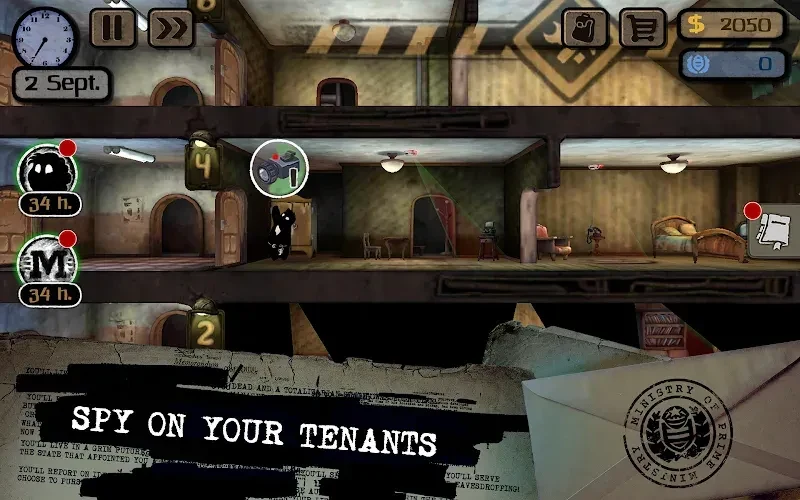
Observation is another important way to collect information. Cameras placed in apartments can show when tenants are doing something suspicious. Before all cameras are installed, you can also observe through a resident’s keyhole. Suspicious actions can be recorded, creating evidence that may support a report or a blackmail attempt. The building therefore functions as both your workplace and an investigation area, with conversations, searches, and surveillance feeding into the same evidence system.
Profiles, Reports, and Blackmail
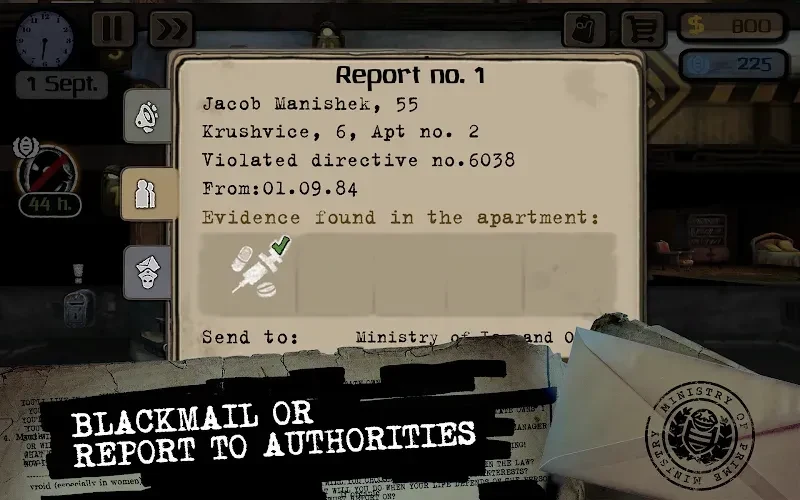
The computer is the main place where collected information is turned into an action. A report can be filed against a tenant or family member for illegal items or activities identified under government directions. The report uses evidence from the collected-evidence section, and the source material states that only one piece of evidence can be submitted for each report. After a report is made, police search the apartment and arrest the tenant.
Profiling offers a different way to use information. You select a tenant and place gathered details into their profile before submitting it. The amount of money received depends on how many information items are added. This gives ordinary observations a financial value, but it also means that the information you collect can serve the State or your own income rather than the interests of the residents.
Blackmail uses evidence to send a letter to a tenant. If the target agrees to pay, money may be left in a potted plant on the first floor, although not every tenant pays. Evidence used in a blackmail letter cannot be reused for another blackmail letter or for a report. To take either action later, you must gather the evidence again. This limitation makes the timing of each decision important and prevents one discovery from being used repeatedly without further investigation.
Moral Choices and Consequences
Beholder: Conductor is structured around choices with effects on the plot and on the people living in the building. Reporting illicit activity can lead to imprisonment and consequences for a tenant’s family or community. Protecting someone can put your own safety and the safety of your loved ones at risk. You may also choose to exploit a resident’s situation for money, even when helping them would better reflect your personal values.
The story follows multiple branches rather than a single fixed outcome. Decisions can produce different paths and endings, including outcomes connected to redemption or a deeper involvement in the oppressive system. The possibility of several endings gives the investigation mechanics a narrative purpose: what you record, what you submit, and what you leave unreported all contribute to the direction of the story.
Family, Money, and Survival
Your character is a poorly paid worker operating under constant State oversight. The need to support your family adds a practical pressure to every moral decision. Profiling and blackmail can provide money, while cooperation with government demands may protect your position. At the same time, helping residents or refusing to report them can create risks that reach beyond the apartment in front of you.
This pressure connects the game’s economic and investigative systems. Evidence is not only a record of wrongdoing; it can become a source of income, a reason for an arrest, or leverage over a tenant. Because each use may prevent the same evidence from being used again, choosing a financial reward over a report, or a report over protection, has both immediate and longer-term implications.
Dark Presentation and Suspense
The setting is a grim future controlled by a totalitarian State, and the apartment building provides a confined backdrop for surveillance and suspicion. Missions involve quietly watching residents, searching their rooms, and collecting information without revealing your intentions. The focus on hidden activity and uncertain consequences supports a tense presentation in which even routine interactions can become important to the next stage of the story.
Rather than separating investigation from narrative, Beholder: Conductor uses its building, residents, computer, cameras, and evidence records as connected parts of the same experience. Talking can reveal a lead, a search can provide proof, surveillance can confirm an action, and the computer determines whether that discovery becomes a profile, report, or blackmail attempt. The resulting story depends on how you balance official responsibility, personal survival, and the lives of the people under your supervision.
Version history
View all25 Feb 2026 · stable